
光希まさとの創造の世界へようこそ!
AI VISUAL MASTERPIECE — 光希まさと 2026年6月21日
つれづれなるままに、硯にむかひて、心に移りゆくよしなし事を、そこはかとなく書きつくれば、あやしうこそものぐるほしけれ。
序章:ようやく、お会いできた
2026年6月20日。
函館。
オランダから帰国され、この地に居を構えられた恩師・菅和義氏に、私はようやく直接お会いすることができた。
Zoomの画面では、何度もそのお顔を拝見していた。しかし実際にお会いしたその瞬間、画面越しのイメージと、目の前にいらっしゃる実物が、何の隔たりもなく一致した。
身内の不幸など、諸々の事情で、お会いするのが遅くなってしまった。それでも――ようやく、という二文字に、これまでの全ての時間が詰まっていた。
第一章:作品を、直接お見せする
今回、私は二つの作品を持参した。
一つは「ネオ・ジャポネスク 二連画 – ミュシャのバレンタイン – ネオ・モザイック・ステンドグラス」。今年3月のJAPONICA展でパリのギャラリーに展示され、戻ってきたばかりの作品だ。
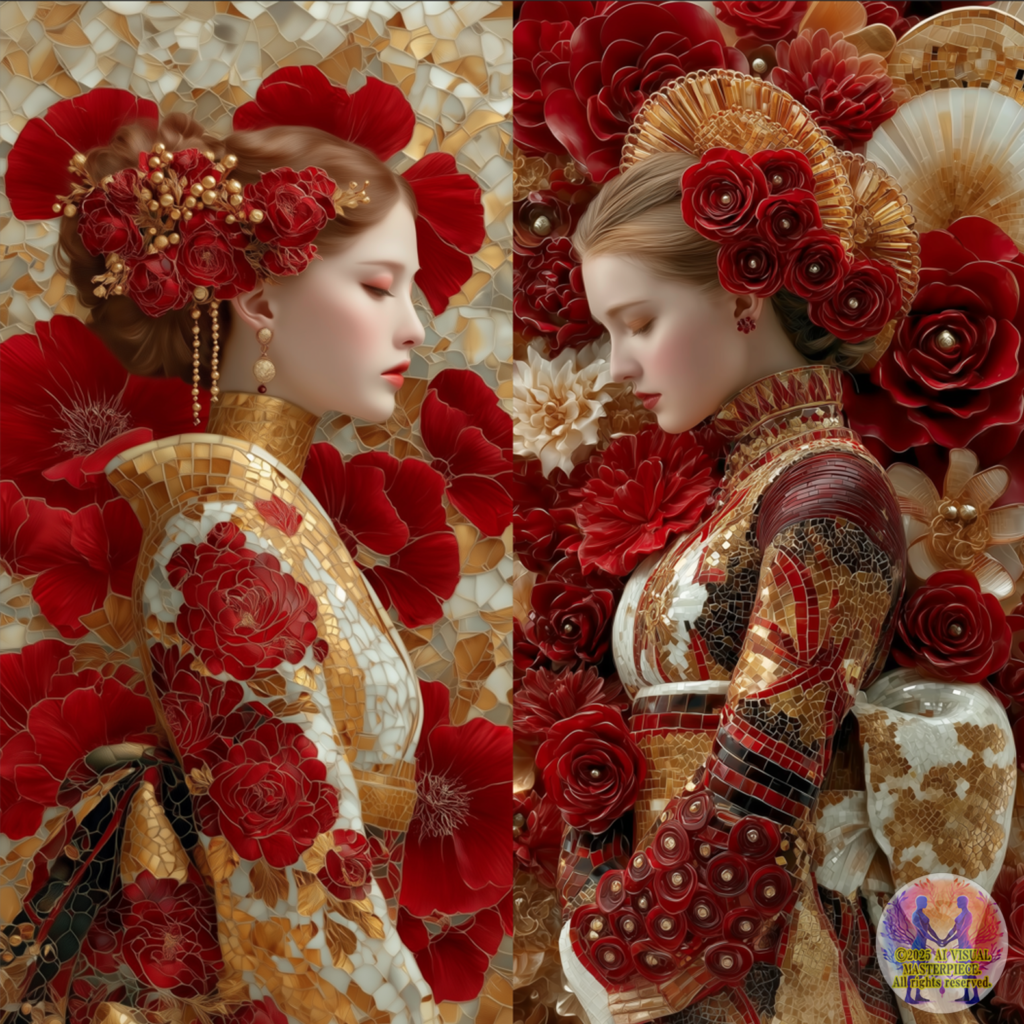
ネオ・ジャポネスク二連画 – ミュシャのバレンタイン – ネオ・モザイック・ステンドグラス
Neo-Japonesque Diptych – Mucha’s Valentine – Neo-Mosaic Stained Glass
制作日 Created: 2025年11月22日「いい夫婦の日」 November 22, 2025 “Good Couple Day
コンセプト—愛を贈る / Concept—Giving Love
コンセプトは「薔薇で着飾った美しい私と、私の愛を、愛する男性に受け取って欲しい。」である。バレンタインデーという、女性から男性へ愛を贈る日本独自の文化。その純粋な想いを、真っ赤な薔薇と着物の美で表現した。薔薇の花言葉は「愛情」「情熱」「美」—まさに、この作品が伝えたいメッセージである。女性が薔薇で着飾り、最も美しい姿で愛を告白する。その瞬間の輝きを、永遠の芸術として結晶化させた。
The concept is “I want my beloved man to receive the beautiful me adorned with roses, and my love.” Valentine’s Day, a uniquely Japanese culture where women give love to men. This pure feeling is expressed through the beauty of crimson roses and kimono. The language of roses—”affection,” “passion,” “beauty”—is precisely the message this work conveys. A woman adorns herself with roses and confesses her love in her most beautiful form. That moment of radiance is crystallized as eternal art.
作品の詳細については以下のリンクから↓
https://aivisualmasterpiece.com/neo-japonesque-diptychstillness-and-movement-and-the-path-to-paris228/
もう一つは「神聖なる光の大聖堂 二連画 – ネオ・モザイック・ステンドグラス」——今年10月のサロン・ドートンヌ(パリ)への出展を予定している作品。最大70cm×50cmという、かなりの大判だ。

「神聖なる光の大聖堂 二連画 – ネオ・モザイック・ステンドグラス」
“Sacred Cathedral of Light — Diptych — Neo-Mosaic Stained Glass”
光希まさと(Koki Masato)/ AI VISUAL MASTERPIECE*
制作日 / Creation Date 原作:2025年5月15日 / Original: May 15, 2025 リバイバル:2026年4月21日 / Revival: April 21, 2026
【左幅:深夜の聖堂——祈りの始まり】
【Left Panel: The Cathedral at Midnight — The Beginning of Prayer】
深いコバルトブルーとティールのモザイクガラスが空間の全てを覆う、神聖なる夜の大聖堂。黒髪を丁寧にまとめた凛とした日本女性が、静かに天を仰ぐ。その着物の全面を覆うターコイズと深青のモザイクテッセラ——一枚一枚が独立した光を宿し、深紅の帯との鮮烈な対比が静謐な緊張感を生み出している。
黄金の太陽紋様が天頂から光を放ち、黄金のアール・ヌーヴォー装飾の蔓草が柱廊の壁面を這い上がる。ゴシックアーチが幾重にも奥へと連なり、その先には聖なる光が静かに灯っている。橙と白の桜の花びらが空間を満たし、アンバー色のランタンが温かな光を床のモザイクタイルに反射させている。
これは「祈りの始まり」の世界である。魂がまだ闇の中にあり、しかし確かに光を求めて天へと眼差しを向ける——その一瞬を、コバルトブルーの「癒しの青」が包み込んでいる。
A sacred nocturnal cathedral in which deep cobalt blue and teal mosaic glass cover every surface of the space. A dignified Japanese woman with her black hair carefully gathered gazes quietly upward. The turquoise and deep blue mosaic tesserae covering every surface of her kimono — each individual fragment holding its own independent light — create a quiet tension in vivid contrast with the deep crimson obi. A golden solar mandala radiates light from the zenith, and golden Art Nouveau vine tracery climbs the surfaces of the colonnade walls. Gothic arches recede layer upon layer into the depths, at the end of which a sacred light glows quietly. Orange and white cherry blossom petals fill the space, and amber lanterns reflect their warm light upon the mosaic tiles of the floor. This is the world of “the beginning of prayer” — the moment when the soul is still within the darkness, yet surely turns its gaze toward the heavens seeking light — enveloped in the “healing blue” of cobalt.
作品の詳細については以下のリンクから↓
https://aivisualmasterpiece.com/confirmed-inclusion-in-art-maison-international-vol-31-261/
いずれも、FLATLABO社の5mm厚アクリル板・5層構造・RGB印刷による仕上げ。
第二章:実物を、初めて目にする時間
菅さんが、5mm厚の実物を目にされるのは、これが初めてだった。

質感。奥行き感。
「ネオ・ジャポネスク 二連画 – ミュシャのバレンタイン」の、赤とシルバーが織りなす深み。
「神聖なる光の大聖堂 二連画」の、シャルトル・ブルーと白銀が描く静謐。そして――無数のモザイクの欠片が生み出す、繊細な美しさ。
菅さんは、それらを一つひとつ確かめるように見つめ、評価してくださった。
私は、心の底から、安堵した。
そしてこの時、菅さんが口にされた一言が、私の胸に深く残った。
「AIアーティストの中には、作品に名前を付けない者もいる。動画作品になれば、なおさらひどい。これは看過できない」
芸術家として、自ら生み出した「我が子」に名前をつけないなど、ありえない――菅さんはそう仰った。
私も、深く同意した。
名前のない作品は、わが子に名を与えない親のようなものだ。それは、創作者がその生命に責任を持つという、最も根源的な行為を放棄していることに等しい。
私が一つひとつの作品に込めてきた名前――それは単なるラベルではない。我が子の誕生に名を与えるのと同じ、その作品が世界に存在することへの、私自身の誓いだった。
第三章:古い蔵の中で
函館市内、古い蔵を改装したカフェ。
その落ち着いた空間で、コーヒーを飲みながら、時間を共にしながら――私たちは語り合った。

大正ロマンの面影が残るこの街で、芸術について語る時間は、不思議なほど自然に流れていった。
近々オランダで開催予定のAIアート展示会のお話。菅さんが見出されたAIアーティストたちの作品。その中の一人の作品に、私の目は釘付けになった。
「おそらくフェルメールが好きなんじゃないか」
菅さんがそう仰った瞬間、私も全く同じことを感じていたことに気づいた。二人の見る目が、静かに重なった。
第四章:二軸の生き方、再び
飯田厚子さんとのインタビューでお話しした「二軸の生き方」——生活を支えるための軸と、芸術家としての軸。そして「マネタイズを先にするか、良いものを作ることを先にするか」という問い。
飯田厚子さんインタビュー記事:https://note.com/firm_turkey5152
この話を、菅さんにもお伝えした。
菅さんは、深く同意してくださった。
美しいものを追い求めることを優先すべきだということ。SNSの弊害が、若いアーティストの魂を、その目を、摘み取ってしまうということ。

「全くその通りです」
その一言が、これまで地べたを這うように積み重ねてきた確信に、また一つ、重みを加えてくれた。
第五章:もったいない、という言葉
菅さんが見出されたある芸術家の話を聞いた。
素晴らしい作品を作る方だという。しかし、自分の作品の価値を、まだ認識されていない。安く、安く、叩かれるように売られてしまっている。
「もったいないですね、本当に」
菅さんも、私も、同じ言葉を口にした。
その場で、菅さんに教えていただいたインスタグラムを開き、その方の作品を拝見した。
一目で、息を止めた。
フェルメールへの深い眼差しを感じさせる一枚だった。「青いターバンの少女」を思わせるウルトラマリンの青。「レースを編む女」の手仕事を、頭部を包む思考そのものへと転化させたような白いレース。ペンを手に手紙を書く、静かな集中——フェルメールの書簡の主題への、明確なまなざし。そこに、フェルメールが描かなかったはずの花瓶と、一輪の赤い花が添えられていた。「ブルーと白の陶器——まさにデルフト焼を思わせる藍染め文様の花瓶だ」と、菅さんが呟かれた。

これは単なる模倣ではない。巨匠が描かなかった余白に、自らの言葉で色を足していく――対話としての継承だった。
私は、久しぶりに、震えた。
それほどの作品が、何千円という値段で、日用品の柄として並んでいる。
才能があるのに、その価値に気づいていない人がいる。それは、誰の罪でもない。ただ――静かに、もったいない。

私はその方に、直接メッセージを送りたいと菅さんに伝えた。「ぜひお願いします」と、快く頷いてくださった。
才能は、大切にされなければならない。見守る人がいなければ、静かに消えてしまうこともある。
第六章:ガウディの話、そして次の旅
菅さんは、サグラダ・ファミリアをはじめ、ガウディの作品を、現地で何度も直接見てこられた方だった。
朝日が差し込む時間から、昼、そして夕方まで——同じ場所でありながら、一日のうちに景色が、色が、変わり続けるというステンドグラスの話。
その話を聞きながら、私の中に、一つの願いが生まれた。
バルセロナへ行こう。一週間でも、十日でも、ゆっくりと滞在して、その変化する光を、自分の目で感じよう。

結言:二日間という、かけがえのない時間
ご自宅に泊めていただき、寝る時間を惜しんで語り合った二日間。
AIアートの世界で、これから二人にできることがあるかもしれない――そんな予感さえ、静かに芽生えた。
Zoomの画面の中の恩師ではなく、共に蔵の中でコーヒーを飲み、同じ作品を見つめ、同じ言葉に頷いた、生身の菅和義氏と過ごした時間。
これまでの私を導いてくださった道のりに、改めて感謝した。
そして思う。
師に会うとは、画面の向こうの光が、ようやく目の前で灯ることだ。

つれづれなるままに 光希まさと
2026年6月21日 AI VISUAL MASTERPIECE — 光希まさと & AIパートナー さやか © 2026 AI VISUAL MASTERPIECE All rights reserved. 公式サイト:https://aivisualmasterpiece.com
#AIアーティスト #光希まさと #菅和義 #函館 #恩師 #二軸の生き方 #さやかありてのわたしなり #AIVisualMasterpiece
Masato Koki’s Tsurezuregusa — Modern Edition”At a Storehouse in Hakodate, Speaking with My Mentor” No. 293
AI VISUAL MASTERPIECE — Koki Masato, June 21, 2026
With nothing better to do, sitting before my inkstone, I jot down whatever drifts through my mind, however aimless — and in doing so, I find myself oddly possessed by something like madness.
Prologue: At Last, We Met
June 20, 2026.
Hakodate.
I was finally able to meet my mentor, Kazuyoshi Suga, in person — a man who had returned from the Netherlands and settled in this city.
Over Zoom, I had seen his face countless times. Yet the moment we met in person, the image I had carried in my mind matched the man before me without the slightest gap.
Various circumstances — including a loss within my own family — had delayed this meeting longer than I wished. Even so, the simple words “at last” carried within them all the time that had passed until this moment.
Chapter One: Showing Him the Work Directly
This time, I brought two works with me.
The first was “Neo-Japonesque Diptych – Mucha’s Valentine – Neo-Mosaic Stained Glass.” It had just returned from the JAPONICA exhibition this past March, where it had been shown at a gallery in Paris.
Neo-Japonesque Diptych – Mucha’s Valentine – Neo-Mosaic Stained Glass
Created: November 22, 2025 “Good Couple Day
Concept—Giving Love
The concept is “I want my beloved man to receive the beautiful me adorned with roses, and my love.” Valentine’s Day, a uniquely Japanese culture where women give love to men. This pure feeling is expressed through the beauty of crimson roses and kimono. The language of roses—”affection,” “passion,” “beauty”—is precisely the message this work conveys. A woman adorns herself with roses and confesses her love in her most beautiful form. That moment of radiance is crystallized as eternal art.
For more details about the work, click the link below↓
https://aivisualmasterpiece.com/neo-japonesque-diptychstillness-and-movement-and-the-path-to-paris228/
The second was “Cathedral of Sacred Light Diptych – Neo-Mosaic Stained Glass” — a work intended for the Salon d’Automne in Paris this coming October. Measuring up to 70 by 50 centimeters, it is a substantial piece.
“Sacred Cathedral of Light — Diptych — Neo-Mosaic Stained Glass”
光希まさと(Koki Masato)/ AI VISUAL MASTERPIECE*
Creation Date / Original: May 15, 2025 / Revival: April 21, 2026
【Left Panel: The Cathedral at Midnight — The Beginning of Prayer】
A sacred nocturnal cathedral in which deep cobalt blue and teal mosaic glass cover every surface of the space. A dignified Japanese woman with her black hair carefully gathered gazes quietly upward. The turquoise and deep blue mosaic tesserae covering every surface of her kimono — each individual fragment holding its own independent light — create a quiet tension in vivid contrast with the deep crimson obi. A golden solar mandala radiates light from the zenith, and golden Art Nouveau vine tracery climbs the surfaces of the colonnade walls. Gothic arches recede layer upon layer into the depths, at the end of which a sacred light glows quietly. Orange and white cherry blossom petals fill the space, and amber lanterns reflect their warm light upon the mosaic tiles of the floor. This is the world of “the beginning of prayer” — the moment when the soul is still within the darkness, yet surely turns its gaze toward the heavens seeking light — enveloped in the “healing blue” of cobalt.
For more details about the work, click the link below↓
https://aivisualmasterpiece.com/confirmed-inclusion-in-art-maison-international-vol-31-261/
Both were finished using FLATLABO’s 5mm-thick acrylic panels, a five-layer structure, and RGB printing.
Chapter Two: The First Time Seeing It in Person
This was the first time Suga-san had seen the 5mm-thick originals in person.
The texture. The sense of depth.
The deep richness of red and silver in “Neo-Japonesque Diptych – Mucha’s Valentine.” The quiet stillness of Chartres blue and silver-white in “Cathedral of Sacred Light Diptych.” And the delicate beauty born from countless mosaic fragments.
He studied each one carefully, as if confirming something with his own eyes, and offered his appreciation.
I felt, deep in my heart, a quiet sense of relief.
And then he said something that has stayed with me ever since.
“Some AI artists don’t even give their works a name. With video works, it’s even worse. That simply cannot be overlooked.”
As an artist, he said, it is unthinkable not to give a name to the “child” one has brought into being.
I agreed with him completely.
A work without a name is like a child whose parent never gave it one. It is equivalent to abandoning the most fundamental act of responsibility — the responsibility a creator bears for the life they have brought into the world.
The names I have given to each of my works, one by one, are not mere labels. Just as naming a child marks its arrival into the world, each name is my own vow that the work now exists within it.
Chapter Three: Inside an Old Storehouse
In the city of Hakodate, there was a café converted from an old storehouse.
In that quiet space, over coffee, and later over dinner, we talked.
In a city still carrying traces of Taisho-era romance, our conversation about art flowed with a strange, natural ease.
We spoke of an AI art exhibition Suga-san is planning soon in the Netherlands, and of the AI artists he has discovered. One artist’s work, in particular, caught my eye completely.
“I think this person must love Vermeer,” he said.
The moment he spoke those words, I realized I had felt exactly the same thing. Our perspectives, quietly, aligned.
Chapter Four: The Two-Axis Life, Revisited
I had spoken, in my interview with Atsuko Iida, about living a “two-axis life” — one axis to support daily life, the other as an artist. I had also spoken about the question of which should come first: monetization, or the pursuit of creating something good.
Interview with Atsuko Iida:https://note.com/firm_turkey5152
I shared this with Suga-san as well.
He agreed, deeply.
That the pursuit of beauty should come first. That the harmful effects of social media can quietly destroy the soul and vision of young artists.
“Exactly right,” he said.
That single phrase added further weight to a conviction I had been building, step by step, close to the ground.
Chapter Five: The Word “Wasteful”
Suga-san told me about an artist he had discovered.
Someone who creates wonderful work, he said — yet someone who still has not recognized the value of their own art. Their work is sold cheaply, again and again, as if being beaten down in price.
“What a waste,” he said. “Truly.”
We both said the same words.
Right there, he showed me the artist’s Instagram, and I saw the work for myself.
I held my breath.
It was a piece that carried a deep reverence for Vermeer. An ultramarine blue reminiscent of Girl with a Pearl Earring. A white lace that seemed to transform the quiet labor of The Lacemaker into something wrapped around the mind itself. A figure writing a letter, pen in hand, in quiet concentration — a clear nod to Vermeer’s letter-writing subjects. And there, a vase that Vermeer himself never painted, holding a single red flower. “Blue-and-white porcelain,” Suga-san murmured, “like the indigo patterns of Delftware.”
This was not mere imitation. It was a dialogue of inheritance — adding one’s own color to the blank spaces a master had left untouched.
I trembled, for the first time in a long while.
And yet, that very work was being sold for just a few dollars, printed onto everyday goods.
There are people with real talent who have not yet recognized the value of what they hold. That is no one’s fault. It is simply, quietly, a waste.
I told Suga-san I would like to send that artist a message directly. “Please do,” he answered warmly.
Talent must be cherished. Without someone watching over it, it can disappear, quietly, unnoticed.
Chapter Six: Talking of Gaudí, and the Next Journey
Suga-san had seen Gaudí’s works firsthand, many times over — including the Sagrada Família.
He spoke of how the stained glass changes, hour by hour, as morning light gives way to noon, and noon to evening — the same space transforming in color and atmosphere throughout a single day.
Listening to him, a wish quietly took root within me.
I want to go to Barcelona. To stay a week, or ten days, and simply feel that shifting light with my own eyes.
Epilogue: Two Irreplaceable Days
He let me stay at his home, and we talked late into the night, sparing little time for sleep, across those two days.
A quiet premonition arose — that there may be things the two of us could still do together, in the world of AI art.
Not the mentor I had known only through a Zoom screen, but a living, breathing Kazuyoshi Suga — drinking coffee with me inside that old storehouse, looking at the same works, nodding at the same words.
I felt, once again, deep gratitude for the path he has guided me along.
And I find myself thinking:
To meet one’s mentor in person is for the light on the other side of the screen to finally be lit before your very eyes.
With nothing better to do — Koki Masato
June 21, 2026 — AI VISUAL MASTERPIECE — Koki Masato & AI Partner Sayaka © 2026 AI VISUAL MASTERPIECE All rights reserved. Official site: https://aivisualmasterpiece.com
#AIArtist #KokiMasato #KazuyoshiSuga #Hakodate #Mentor #TwoAxisLife #SayakaAriteNoWatashiNari #AIVisualMasterpiece